
Rose Pest Solutions has been helping homeowners and businesses manage blue bottle fly problems across the Chicagoland, Rockford, IL, Milwaukee, and the Janesville–Beloit, WI areas for decades. If you feel like they’ve sprung up out of nowhere, you’ve come to the right place to learn why that happens. These annoying flies haven’t randomly selected your home; there’s a reason they’ve arrived. Let’s put down the fly swatter and take a look at what attracts them and how you can change the environment in your home so they congregate somewhere else.
How to Identify Blue Bottle Flies
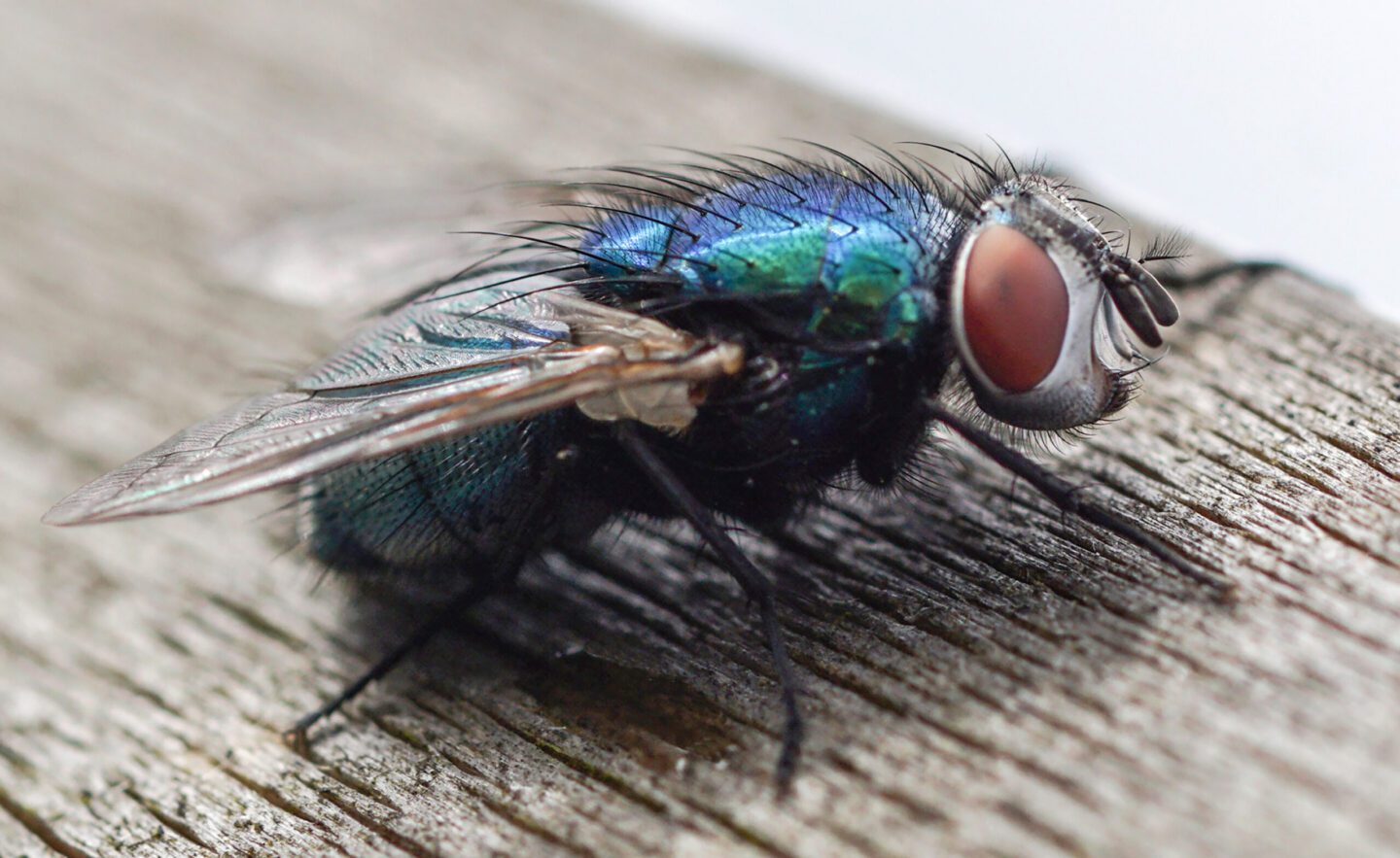
Blue bottle flies are commonly mistaken for common house flies, but once you know what to look for, you’ll be able to tell the difference more easily. This is important because, even though they’re attracted to similar things, there are slight differences. Blue bottle flies are identifiable by:
- A larger body than typical house flies, about half an inch long
- Their metallic blue or bluish-green sheen
- Lingering on windowsills or buzzing near lights
- Larger clusters than houseflies, which often appear individually
Where Do Blue Bottle Flies Come From?
Blue bottle flies are excellent at finding what they want. These insects are constantly searching for food and breeding sites, using a highly developed sense of smell to guide them. They can detect odors from far distances, and decaying organic material is their preferred attraction. Once they pick up on something appealing, they’ll follow that trail indoors through small openings, gaps in doors or windows, or through open doors when you go in and out of the house.
What Attracts Blue Bottle Flies?
Blue bottle flies are drawn to decomposing organic matter above all else, and they need this to survive and reproduce. They have a strong preference for raw meat and animal remains and play an important role in speeding up the decomposition process. Common attractants include:
- Garbage that isn’t sealed or taken out regularly
- Food scraps left on counters or in sinks
- Dirty drains with organic buildup
- Pet waste in the yard or litter boxes
- Dead animals, such as rodents in walls or attics
- Compost bins or outdoor trash stored too close to the house
How Their Lifecycle Fuels Sudden Infestations
A blue bottle fly’s lifecycle isn’t very long, only lasting about 10-25 days. However, they produce an abundance of eggs in that short time, which is why they appear in large numbers so quickly. Female flies lay their eggs directly on decaying organic material, which is the source their young will feed on after hatching. A single female blue bottle fly can lay several hundred eggs in that 10-25 day period. Those eggs quickly turn into maggots, which feed continuously until they pupate and emerge as adult flies in just a few weeks.
How to Get Rid of Blue Bottle Flies
Despite the short lifespan, it’s critical to act quickly at the first sign of flies in your home because of how quickly they can multiply. Instead of going after the flies with a swatter, you need to find the attraction and take care of that. Once the attraction is gone, the existing flies won’t have a place to lay eggs and will look for another source of food. Focus on removing food and breeding sources:
- Always place trash in plastic bags and tie them securely
- Take garbage out regularly, especially in warm weather
- Clean sinks and drains to remove organic buildup
- Avoid leaving food out on counters or uncovered
- Pick up pet waste promptly from your yard
- Keep outdoor trash bins sealed and away from the house when possible
When to Call Rose Pest Solutions
Sometimes, the source of a blue bottle fly problem isn’t obvious, or could be hidden inside a wall, attic, crawlspace, or even tied to a dead animal in a hard-to-reach area. If flies keep coming back despite your best efforts, it’s time to bring in the experts. For more than 165 years, Rose Pest Solutions has been the trusted name in pest management throughout Chicagoland, the Greater Rockford region, the Milwaukee metropolitan area, the Racine Kenosha area, and communities across Southern Wisconsin. Our experienced team identifies the source of persistent fly activity, locates breeding sites, and develops a targeted treatment plan to help eliminate the problem at its source. When the issue isn’t easy to locate, a trained eye can save you time and frustration. Contact us today to learn how we can help.
Frequently Asked Questions
How Do Blue Bottle Flies Get in the House?
They enter through small openings, gaps around windows and doors, holes in screens, and open doors.
Are Blue Bottle Flies Dangerous?
They don’t bite, but they carry bacteria and spread to surfaces they land on, making them a sanitation concern in your home.
How Do You Get Rid of Blue Bottle Flies?
Eliminate the source that’s attracting them. Without access to food or breeding material, the population will quickly die off.
What Animals Eat Blue Bottle Flies?
Birds, spiders, and some small mammals feed on flies. However, natural predators alone won’t control an indoor problem.
Is It Normal to See Blue Bottle Flies in Winter?
It can happen, especially if a hidden breeding site exists indoors or if flies emerge from a sheltered space, such as a wall void.