
Fall is almost here! While you may be ready for cooler temperatures, some pests are getting ready for the change in seasons as well. Our Entomologist, Allison Beach, B.C.E.-Intern compiled some great info on how to prevent fall pests.
As temperatures begin to drop and crops are harvested throughout the Midwest, stink bugs, boxelder bugs, Asian lady beetles, and cluster flies start looking for protected places to spend the colder months. Unfortunately, our homes can provide exactly the kind of shelter they’re looking for. That’s why September is such an important time for prevention of these pests. Now is the time to get ahead of fall pests and take the necessary steps to prevent them entering your structure.
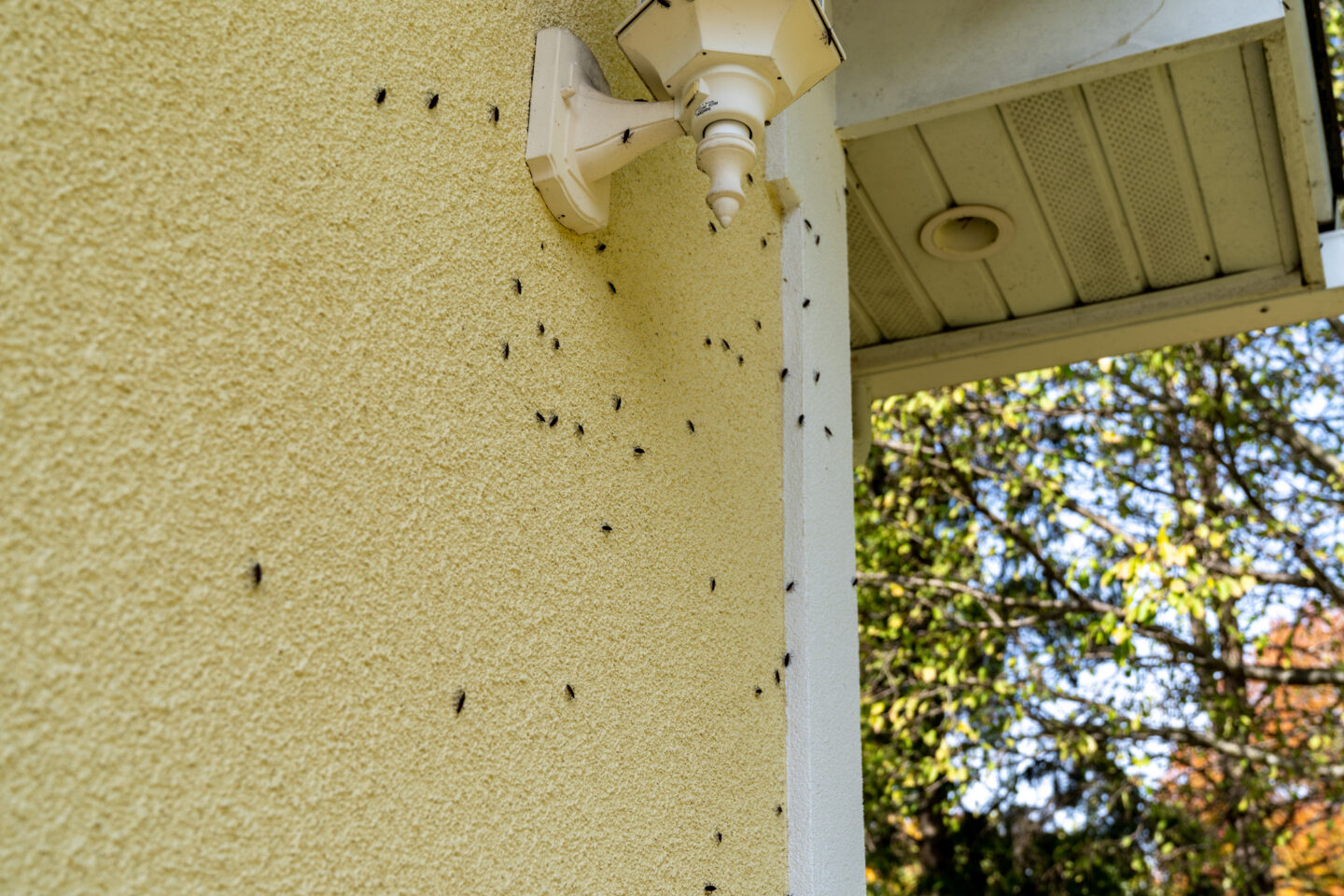
Why Do Bugs Come Inside in the Fall?
Not all insects die off when cold weather arrives. They have developed many ways to overwinter, or slow down/change their biological processes during these cold months until conditions improve in the spring. It’s essentially the insect version of hibernation.
Insects can overwinter at any life stage. There may be insect eggs or larvae spending the winter deep in the soil, or insects can overwinter as adults by migrating to warmer areas like Monarch butterflies, or even producing a natural anti-freeze in their bodies. The fall invaders mentioned in this blog are pests because they overwinter by finding warm places to hide safely within our homes or other structures.
Small openings around siding, windows, doors, utility lines, vents, soffits, and rooflines can give insects access to wall voids, attics, and other concealed areas in your home to safely overwinter. Falls pests are NOT entering structures in search for food, and they will not reproduce once they have entered. These insects are already adults, and will not develop any further in a structure. They’re looking for shelter only. Once they’ve found it, they are much harder to control.
And this year, we may have a little more time before cooler weather really settles in. The National Pest Management Association’s Fall & Winter 2026 Bug Barometer predicts above-average temperatures for the Great Lakes, Ohio Valley and Midwest, which could extend the season for stinging insects and ticks. Even with warmer conditions hanging around, the seasonal shift is coming, making now a good time to prepare your home for the overwintering pests that typically arrive with fall.
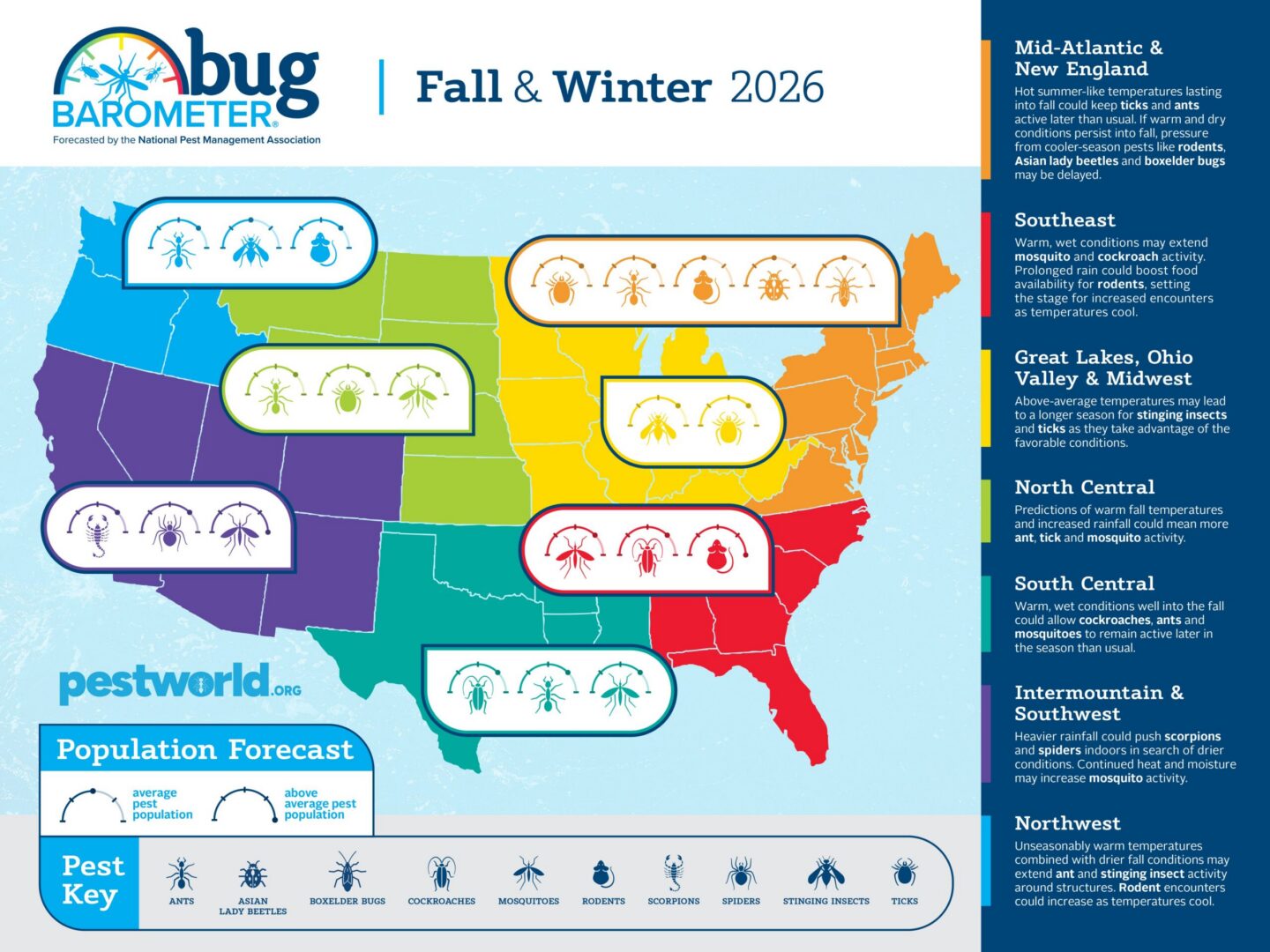
NPMA’s Fall & Winter 2026 Bug Barometer forecasts pest activity across the U.S. based on seasonal weather predictions.
The Usual Fall Pest Suspects
If you’ve lived in Chicagoland, the Greater Rockford region, or Southern Wisconsin for any length of time, chances are you’ve encountered at least one of these notorious seasonal visitors.
Brown Marmorated Stink Bugs (BMSB)
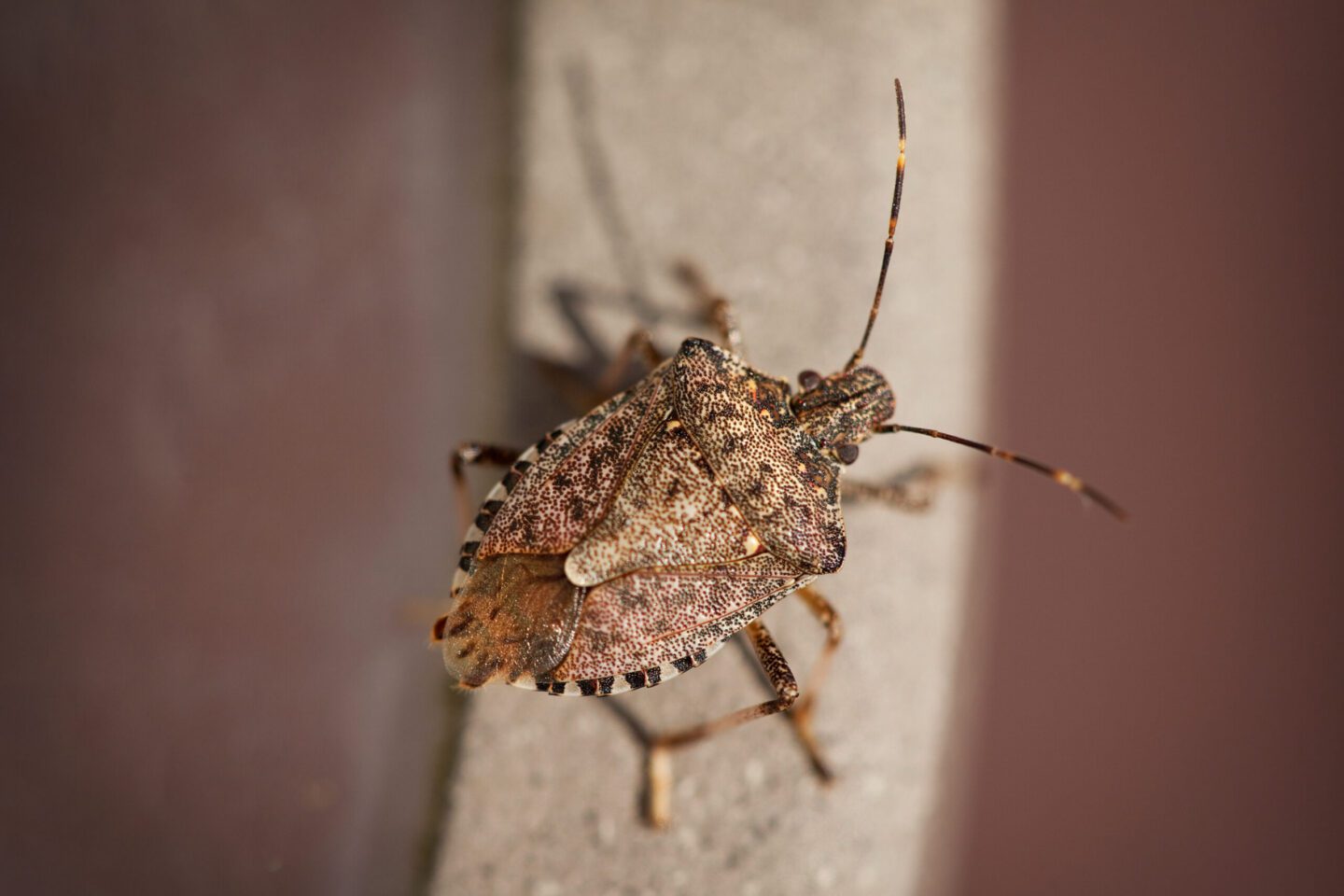
Brown marmorated stink bugs spend much of the warmer season outdoors feeding on plants. They often gather on warm, sunny sides of buildings before squeezing through small openings to find protected overwintering sites.
They’re mostly a nuisance indoors, but they’re a particularly memorable one. When threatened or crushed, stink bugs can release the unpleasant odor that earned them their name. In large numbers, brown marmorated stink bugs can also stain surfaces.
Boxelder Bugs
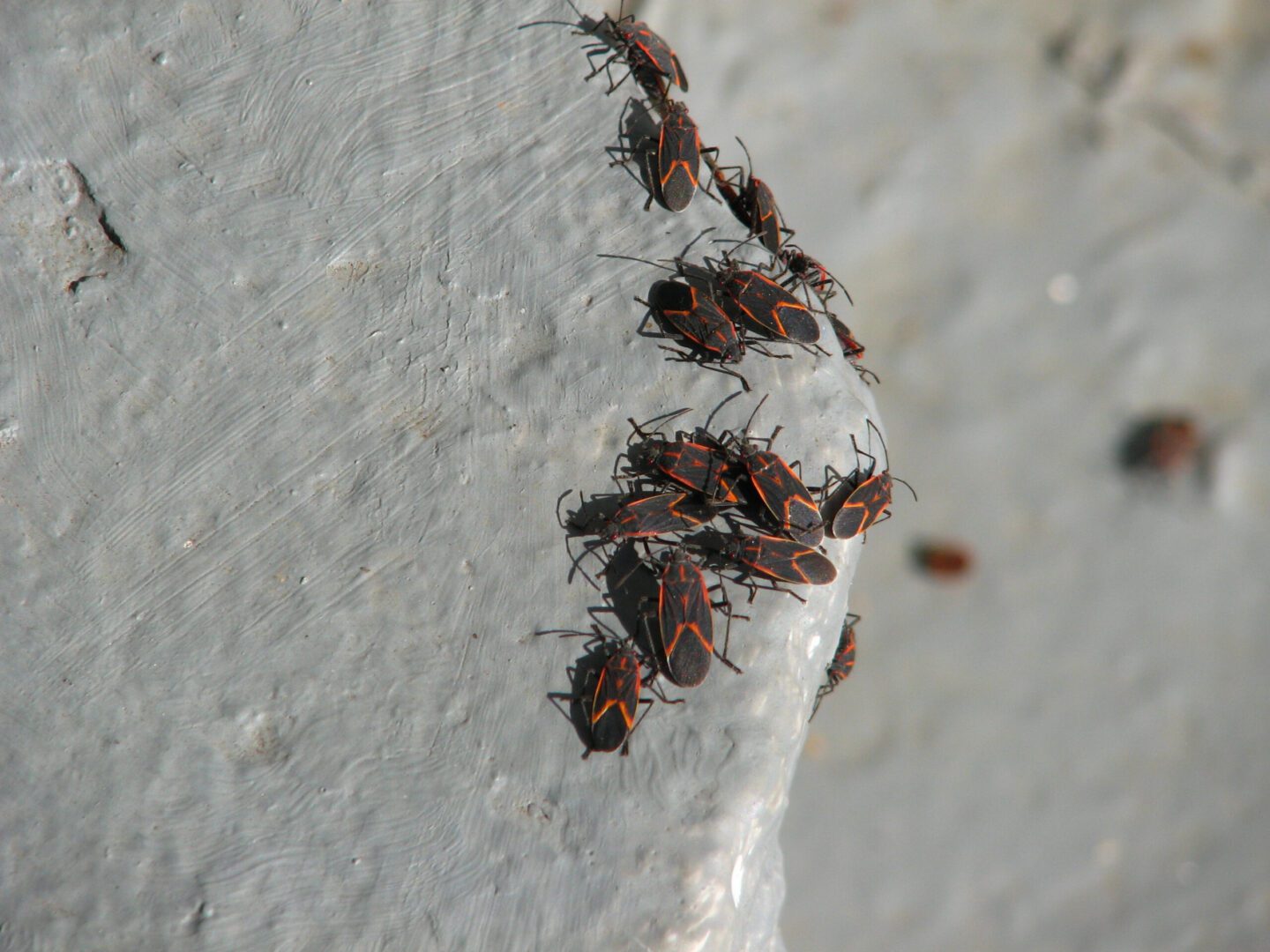
Boxelder bugs are easy to recognize by their black bodies and reddish-orange markings on their backs. During the warmer months, they’re commonly found around boxelder trees and other maples.
When cooler weather arrives, their behavior changes. They gather in large numbers on sunny exterior walls, foundations, windows, and doors before searching for a protected place to overwinter.
They don’t typically damage the structure of a home, but a large group covering the side of your house or flying indoors is not a welcome sight. Boxelder bugs can be a very large nuisance inside a home.
Asian Lady Beetles
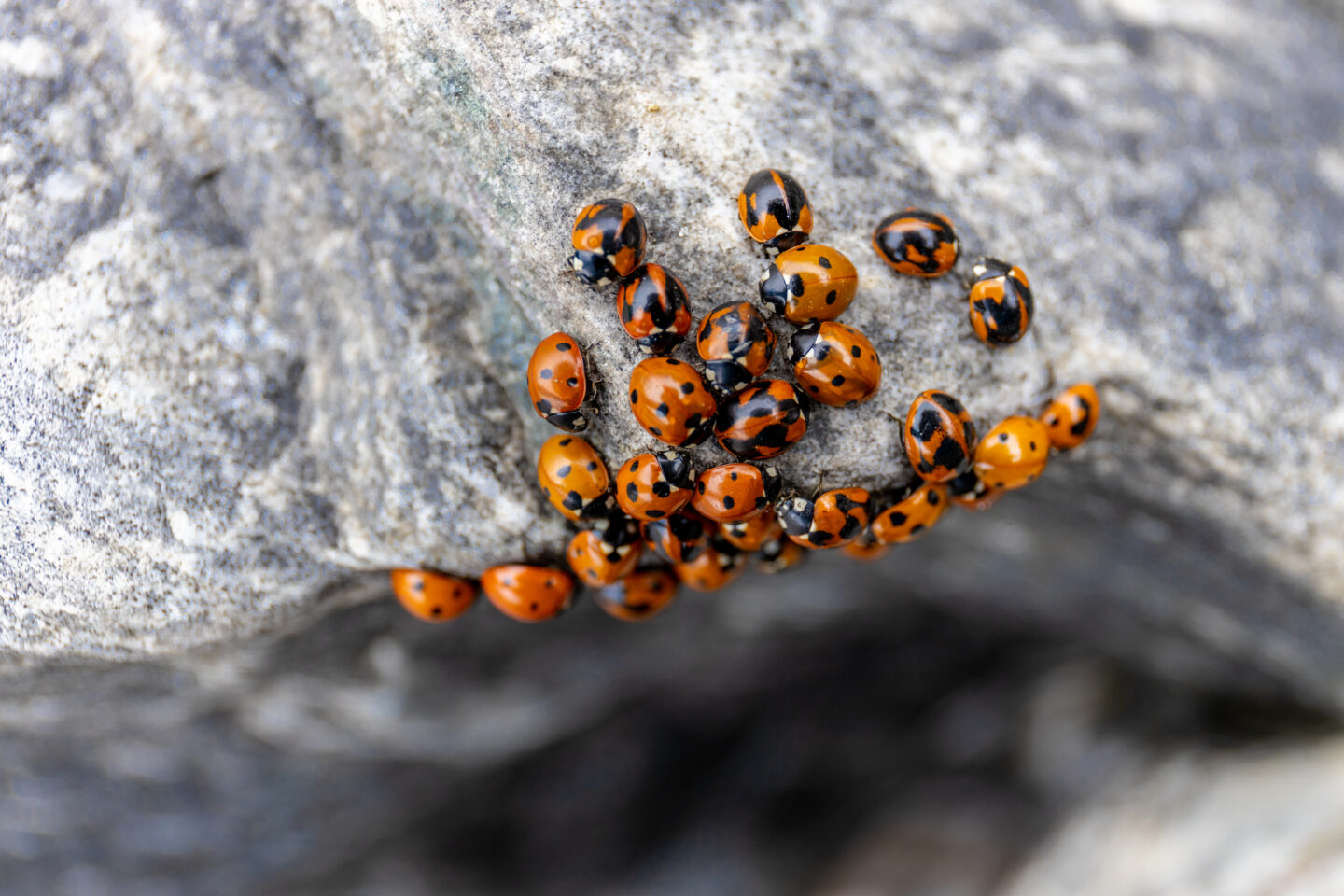
Multicolored Asian lady beetles are beneficial predators outdoors where they feed on aphids and other small plant pests. But in the fall, they can become a nuisance when they gather on the sunny sides of buildings and work their way indoors to overwinter.
Once inside, you may find them around windows, ceilings, and other areas that receive sunlight. They are also attracted to fluorescent lighting inside. When disturbed, they can also release a yellowish defensive fluid that may stain some surfaces or have a foul odor. Asian lady beetles can use their mouthparts (called mandibles) to pinch human skin when directly threatened.
Cluster Flies
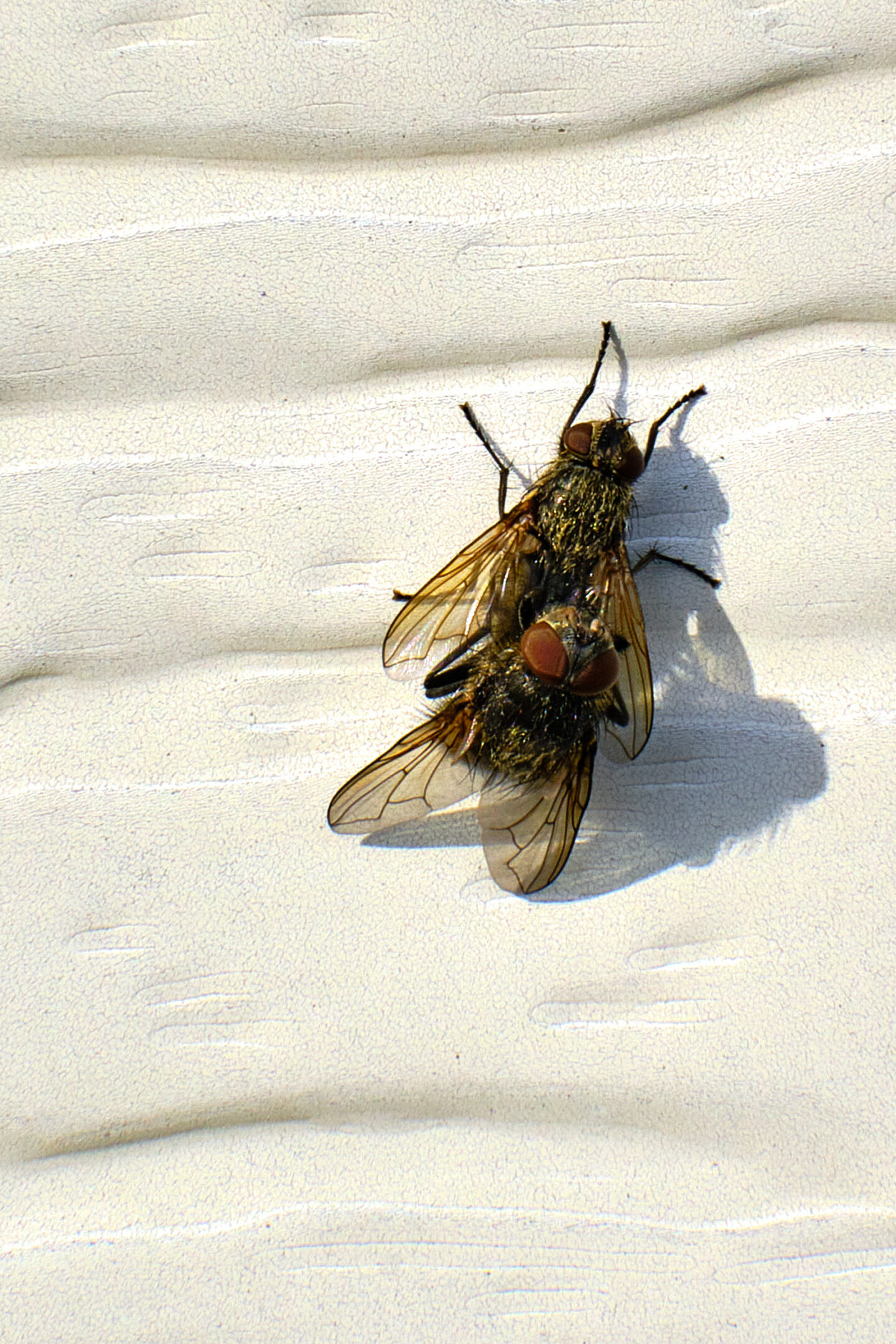
Ever see a big fly slowly buzzing around a window in the fall/winter and wonder where it came from? If its flight looks almost drunk or sluggish, you could be looking at a cluster fly.
Unlike house flies and blow flies, cluster flies aren’t usually associated with garbage, spoiled food, or dead animals. Their larvae develop outdoors only and are parasitoids of earthworms. Cluster fly adults lay eggs in the soil, and larvae seek out earthworms to feed on and inevitably kill them as part of their life cycle.
Adult cluster flies become a nuisance in the colder months. As temperatures cool, they look for protected places to overwinter and may enter attics, wall voids, and other concealed areas of a structure. It’s common to see them gather and die in large groups near windowsills or other sources of light or heat.
Have You Had These Pests Before?
Your home’s pest history is one of the best clues for what you could be dealing with again this fall.
Think back to previous years. Do stink bugs regularly show up indoors? Have boxelder bugs covered the sunny side of your house? Do Asian lady beetles collect around your windows? Have cluster flies appeared upstairs? If so, it’s important to pay attention and take steps to prevent these pests NOW.
The same cracks, gaps, and protected spaces that worked for these insects before may still be available this year.
Why do these bugs appear indoors in the middle of winter?
It’s the middle of winter, and all of a sudden, you hear buzzing near your indoor lighting. It feels like that stink bug or Asian lady beetle magically appeared and is causing a nuisance inside. They didn’t JUST enter your structure. It’s very likely that they may have been hiding inside since fall. A stretch of unseasonably warm weather, indoor heat, or sunlight in the right spot can trigger overwintering insects to think it’s spring, become active, and wander into your living space. By the time you’re seeing them indoors, prevention is a whole lot harder.
How Can You Keep Fall Pests Outside?
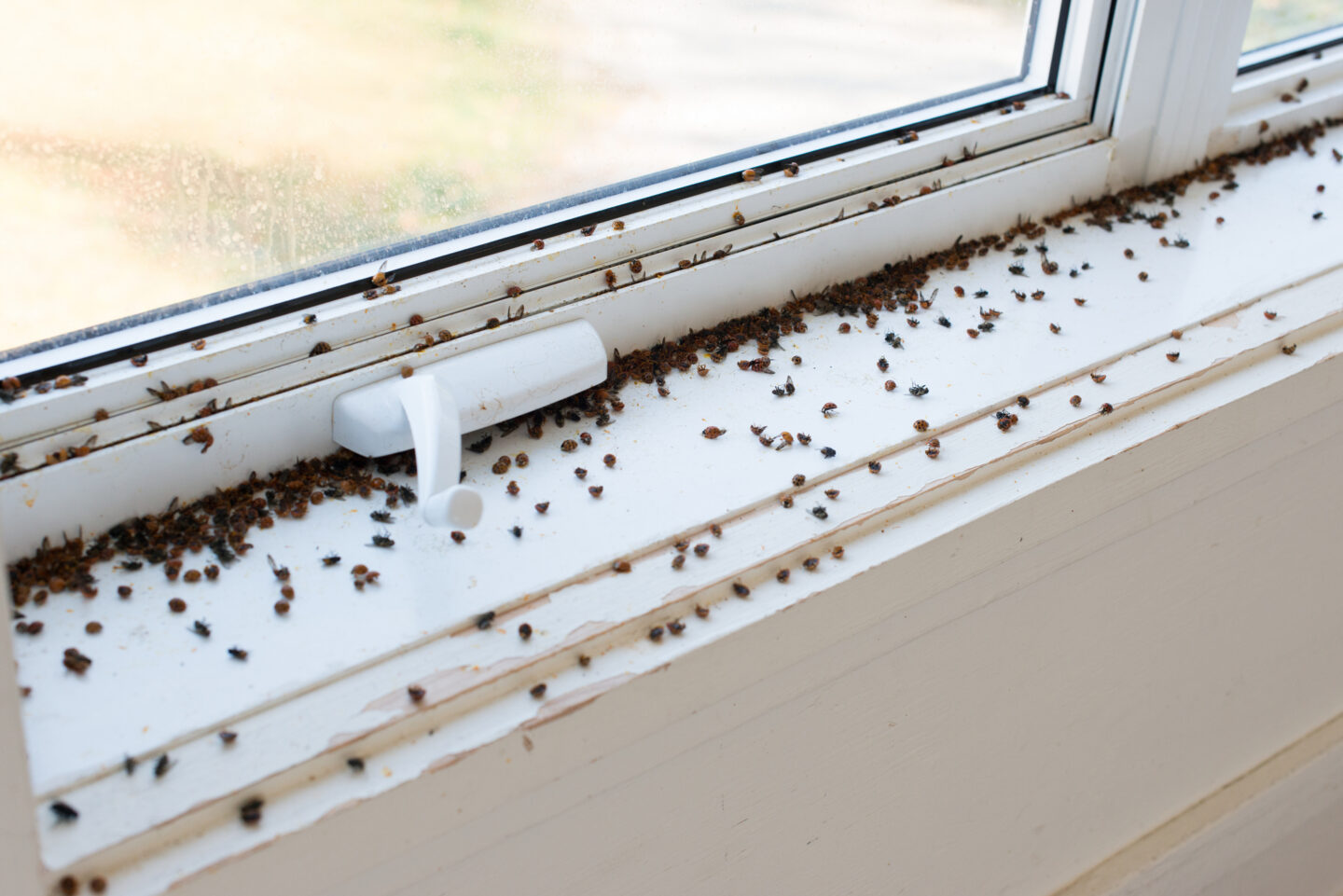
Start with the exterior of your home. Overwintering insects don’t need a wide-open door to get inside, so look closely for the little things.
Check weatherstripping around doors and windows, repair damaged screens, make sure they fit correctly, and seal visible cracks and gaps around siding and exterior trim. Pay attention to areas where pipes, cables, utility lines, and vents enter the structure. Don’t forget to look up as well. Soffits, fascia/trims, rooflines, and attic vents can provide entry points that are easy to miss.
Pay extra attention to the south and west-facing sides of your structure. That is where the most sun accumulates and where insects preparing to overwinter may aggregate.
Professional exterior treatments can also help manage overwintering pests as they begin gathering around structures and searching for ways inside. However, timing is VERY important when it comes to these fall invaders.
September Is Your Window for Fall Pest Prevention
Once these pests have made their way into wall voids, attics, and other protected spaces, they’re much harder to reach. Treating insects in a concealed area results in dead bugs in an unreachable place, which can cause odors and attract even more pests. That’s why waiting until you’re finding bugs crawling around inside isn’t the best game plan.
September gives us an opportunity to address fall pest activity before it moves indoors.

At Rose Pest Solutions, we’ve been protecting Midwest homes for generations and know how pest activity changes with the seasons. Our Healthy Home Maintenance Program provides year-round protection against common household pests, with regularly scheduled service based on the season and what’s happening in and around your home.
If stink bugs, boxelder bugs, Asian lady beetles, cluster flies, or other fall pests seem to find you every year, don’t wait for them to move in again. Contact us today for a free quote and let us help you prevent these pests from entering your structure.