
Bald-Faced Hornet Control in Chicagoland, the Greater Rockford Region and Southern Wisconsin
Bald-faced hornets are hard to miss with their striking black and white markings and large, enclosed paper nests. Common throughout Chicagoland, the Greater Rockford region, and Southern Wisconsin, these social wasps are beneficial predators and pollinators. However, when they build nests near homes, patios, walkways, or other frequently used outdoor spaces, their defensive behavior can become a serious concern.
If you’ve discovered a bald-faced hornet nest on your property, Rose Pest Solutions can help. Our experienced pest management professionals provide stinging insect control services to identify nesting activity, evaluate potential risks, and recommend appropriate treatment.
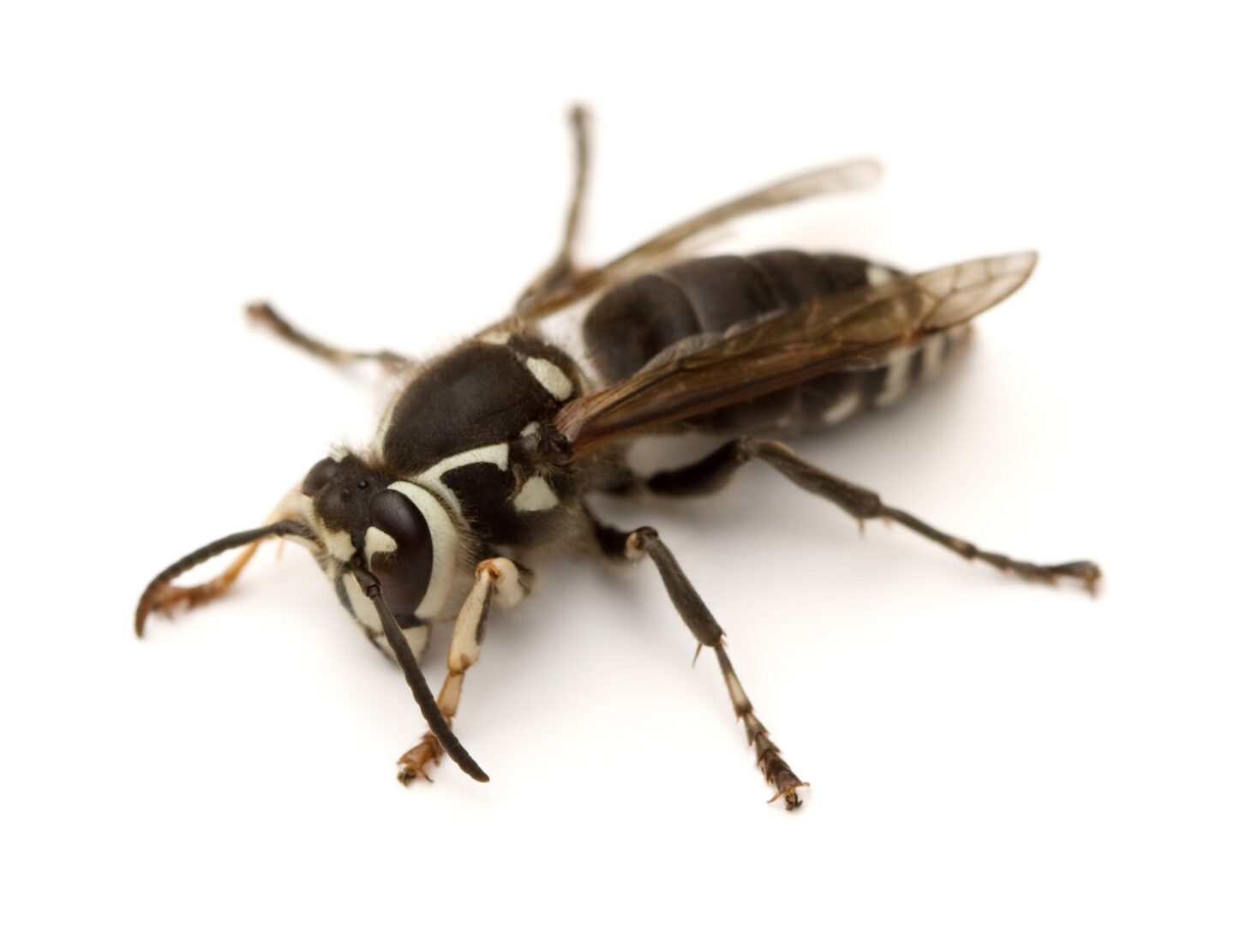
How to Identify Bald-Faced Hornets
Bald-faced hornets are among the most recognizable stinging insects found in the Midwest. Their appearance is noticeably different from the familiar black and yellow markings of most yellowjackets.
Key identification characteristics include:
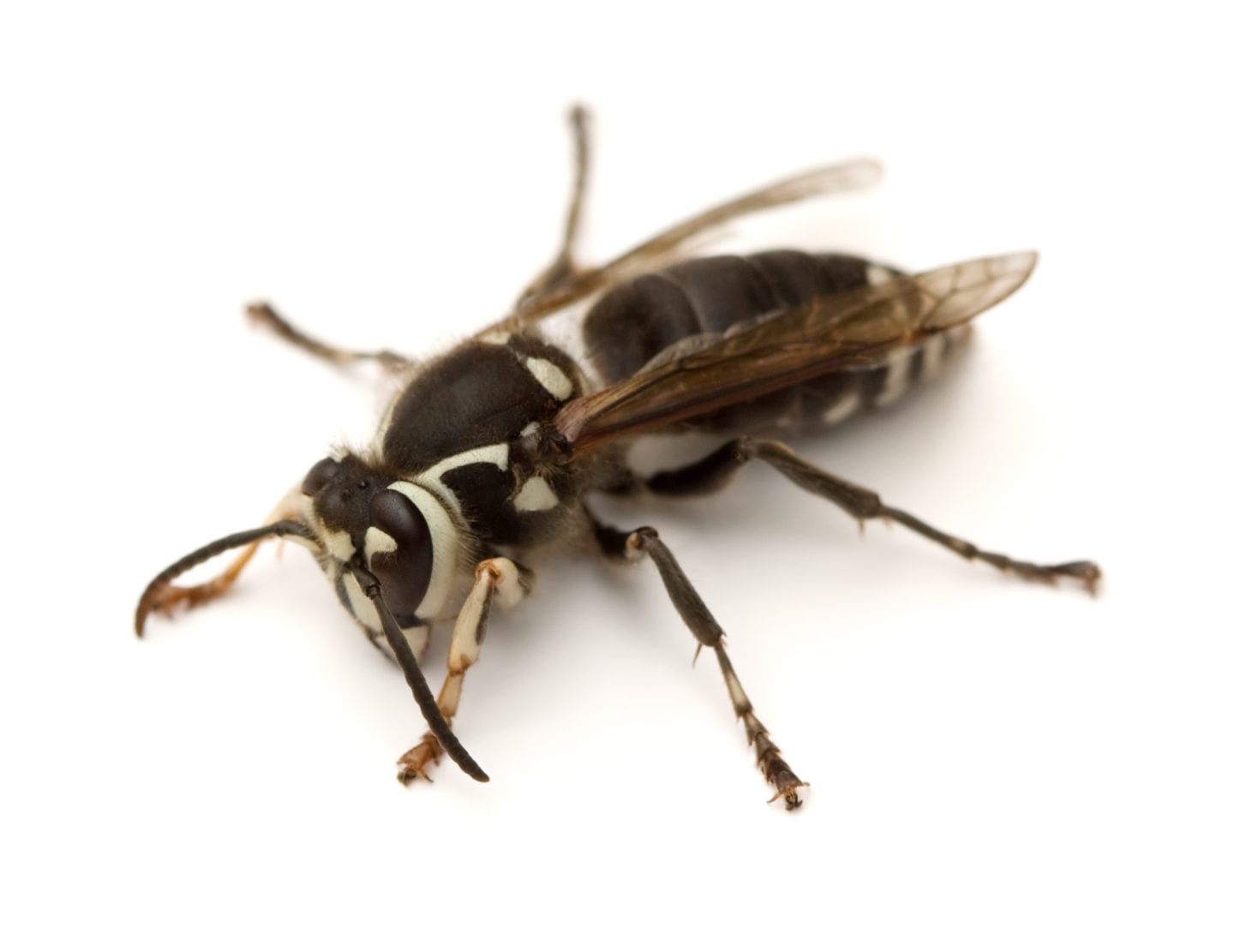
- Predominantly black bodies with distinctive white markings on the face, thorax, and abdomen
- Smooth bodies with relatively little hair
- Approximately 5/8 to 3/4 inch long, with queens sometimes growing larger
- A narrow waist and two pairs of wings
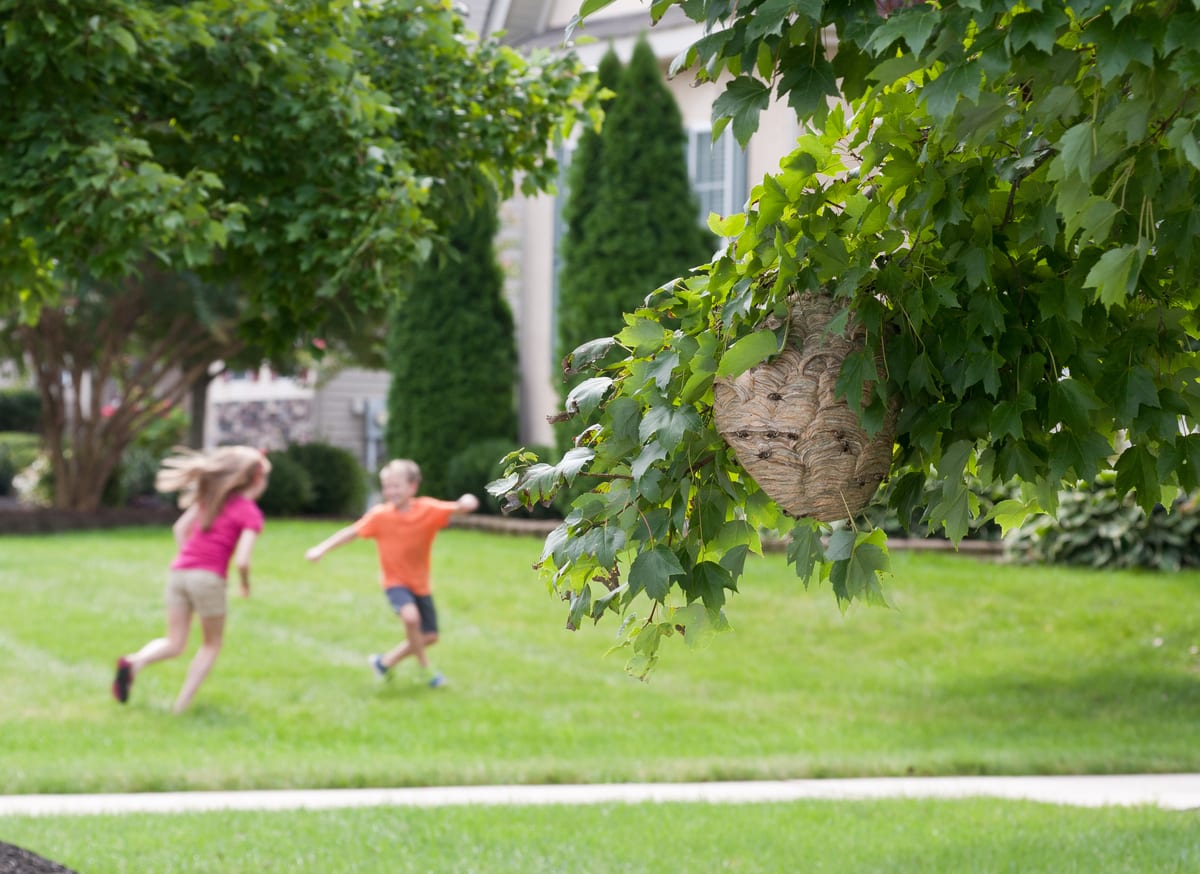
- Large, football shaped, enclosed gray paper nests typically suspended above ground
Unlike yellowjackets, which frequently nest underground or in structural voids, bald-faced hornets generally construct visible aerial nests in trees, shrubs, and on buildings.
Additional Imagery
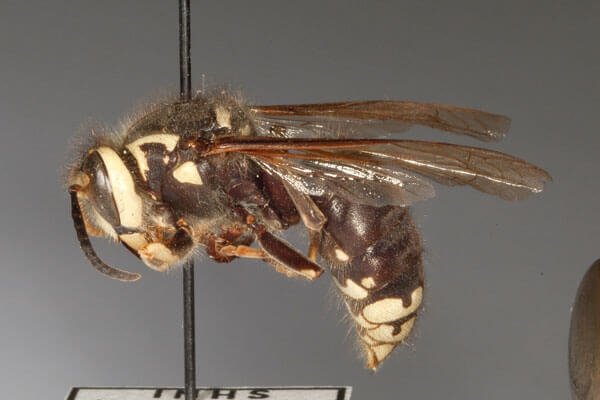
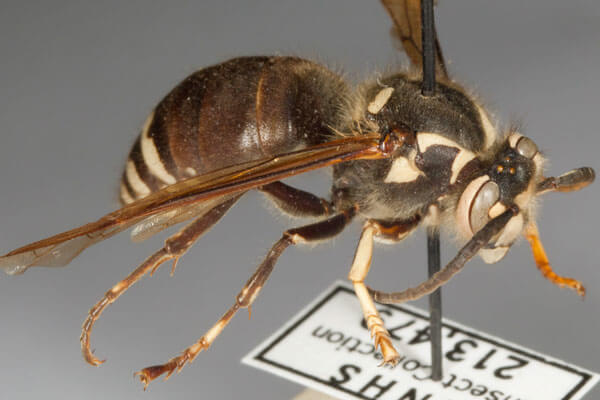
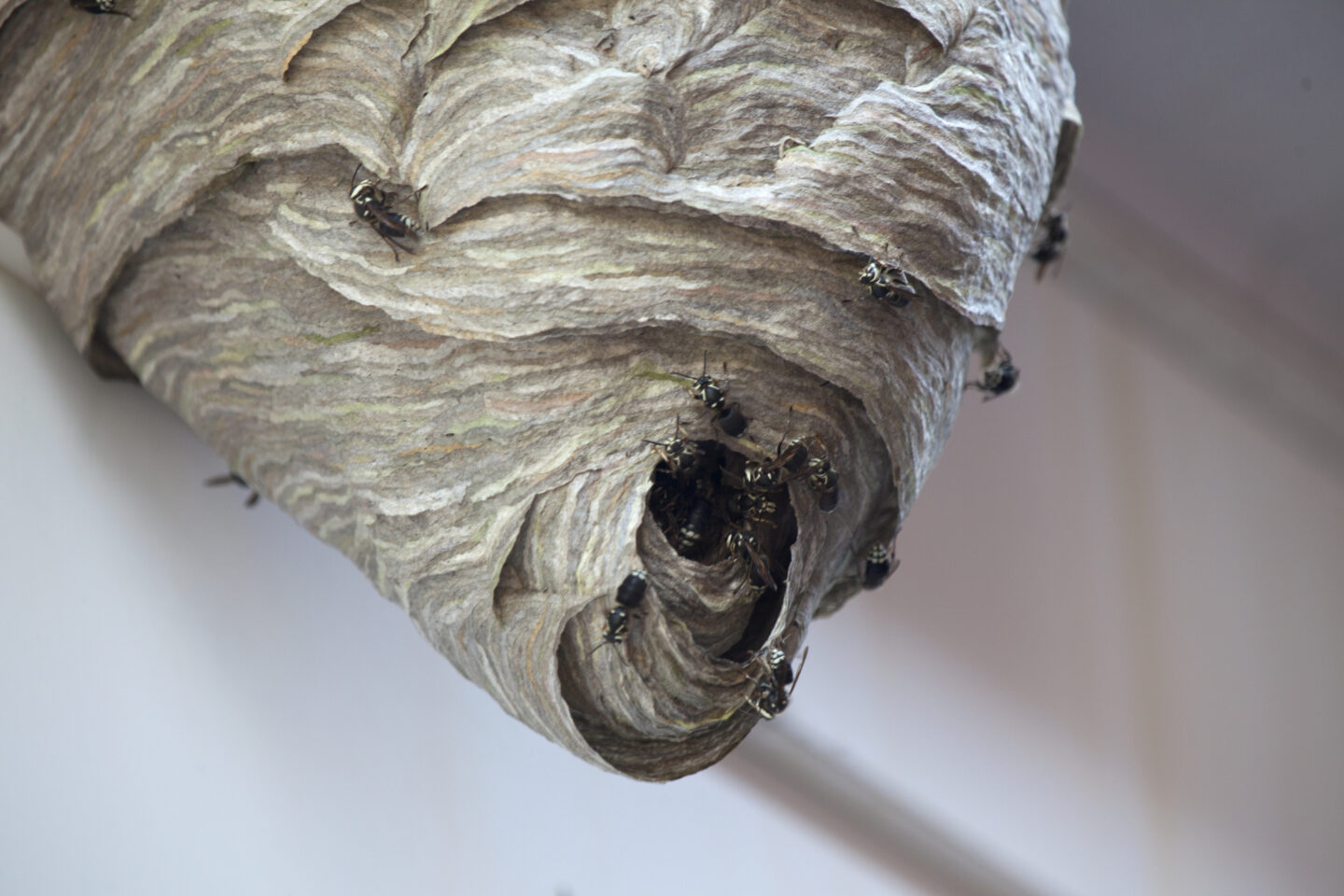
Is This Your Critter?
Maybe it is, maybe it isn’t. We can handle the identification and get you a solution to your problem quickly.
Get a remedy now. Send a message!
Where Do Bald-Faced Hornets Build Their Nests?
One of the most distinctive characteristics of bald-faced hornets is their impressive nest construction. Workers collect weathered wood fibers, mix them with saliva, and create a paper-like material that forms the nest’s protective outer covering.
Nests begin small in spring and gradually expand as the colony grows. By late summer or early fall, some can reach the size of a football or larger.
Common nesting locations include:
- Tree branches and dense shrubs
- Roof overhangs and eaves
- Sheds and detached garages
- Exterior building structures
- Utility poles and other elevated surfaces
These nests typically have a gray, layered appearance with an entrance near the bottom.
Homeowners often discover bald-faced hornet nests during late summer when colonies are largest, or in fall when leaves begin dropping from trees and previously concealed nests become visible.
What Do Bald-Faced Hornets Eat?
Although their appearance can be intimidating, bald-faced hornets play an important role in the environment. They’re natural predators that hunt flies, caterpillars, yellowjackets, and other insects, helping regulate populations.
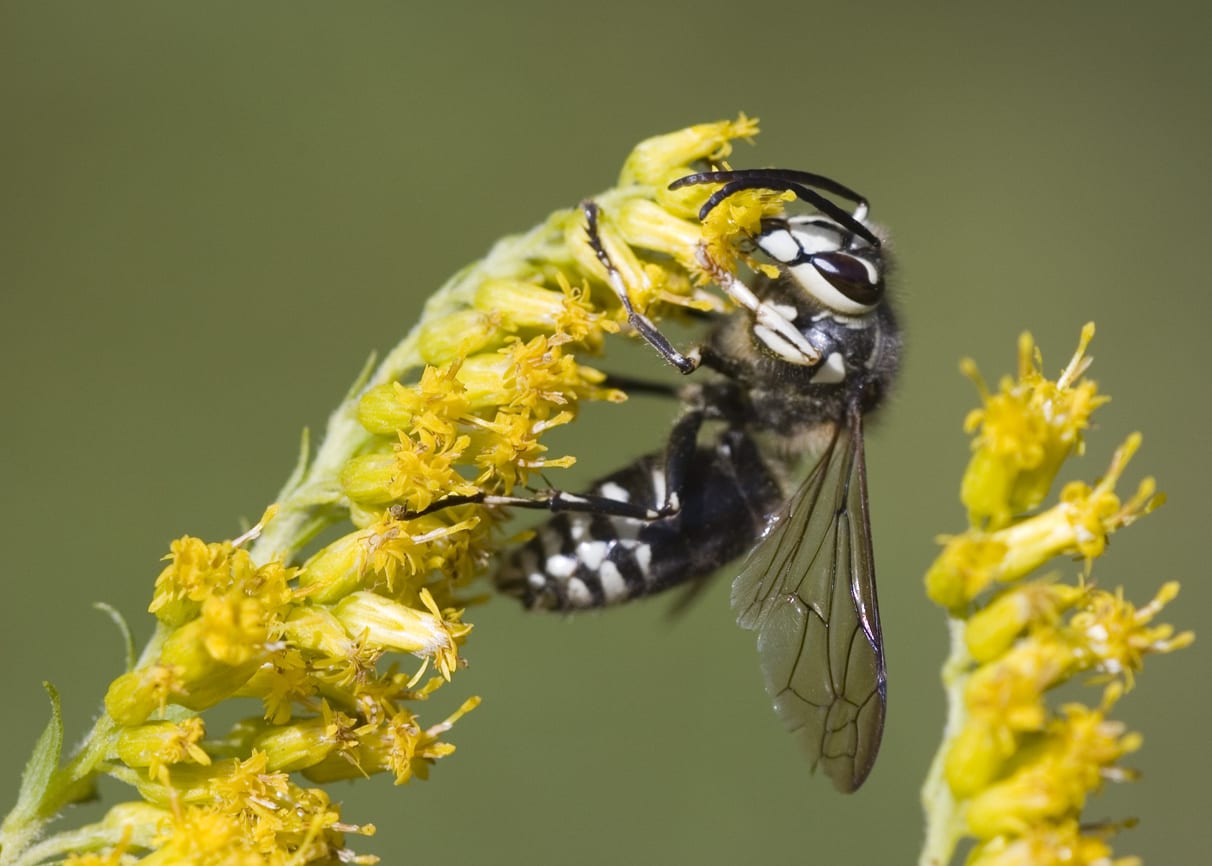
Adult bald-faced hornets also consume nectar and other sugary substances, occasionally contributing to pollination while visiting flowers.
Because of these ecological benefits, not every bald-faced hornet nest requires removal. A nest located high in a tree and away from people or pets may be left undisturbed. However, nests near entrances, playgrounds, patios, and other high-traffic areas deserve professional evaluation.


Are Bald-Faced Hornets Dangerous?
Bald-faced hornets are especially protective of their nests and can respond aggressively when they perceive a threat to their colony. Unlike honey bees, they can sting repeatedly without losing their stingers.
Accidental encounters can occur while trimming shrubs, mowing lawns, working around rooflines, or playing outdoors near an active nest.
Their stings can cause immediate pain, redness, and swelling. For individuals with insect allergies, a sting could trigger a severe allergic reaction requiring emergency medical attention.
If you notice hornets repeatedly flying to and from a particular location, keep your distance and avoid disturbing the area.
Frequently Asked Questions About Bald-Faced Hornets
Do bald-faced hornets sting more than once?
Yes. Bald-faced hornets have smooth stingers that allow them to sting repeatedly. They are particularly defensive when their nest is threatened, which makes approaching or disturbing an active colony risky.
Do bald-faced hornets reuse the same nest every year?
No. Bald-faced hornet colonies are annual. Most colony members die when freezing temperatures arrive, while newly mated queens survive the winter in sheltered locations like within rotten logs or buried in soil. These queens establish new nests the following spring rather than reusing the previous year’s nest.
When are bald-faced hornets most active in the Midwest?
Bald-faced hornets are active from spring through fall, with colonies generally reaching their largest populations in late summer and early fall. During this period, increased worker activity and larger nests make them more noticeable around homes and businesses.
What should I do if I find a bald-faced hornet nest?
Avoid approaching, spraying, striking, or attempting to knock down the nest. Keep children and pets away from the area and contact a pest management professional if the nest is located near frequently used spaces. Nests far from human activity may not require treatment.
Will bald-faced hornets attack without being provoked?
Bald-faced hornets generally focus on foraging and colony activities rather than pursuing people. However, they can respond aggressively to movement, vibrations, or disturbances near their nest, even when someone approaches unintentionally.
Should I remove an empty bald-faced hornet nest in winter?
Once a colony has died following freezing weather, its nest will not be reused the following year. Empty nests generally do not require removal unless they’re creating a maintenance or aesthetic concern. Make sure the nest is inactive before considering removal.
How can I prevent bald-faced hornets from nesting around my home?
There is no guaranteed way to prevent bald-faced hornets from building nests outdoors. However, regularly inspecting eaves, sheds, shrubs, and other potential nesting areas during spring and early summer can help you recognize activity before colonies become large. Avoid disturbing newly discovered nests and seek professional guidance when they’re near occupied spaces.
Schedule Professional Bald-Faced Hornet Control with Rose Pest Solutions
A bald-faced hornet nest doesn’t have to keep you from enjoying your yard. Whether you’ve discovered a large nest near your home or you’re unsure which stinging insect is causing problems, the experienced team at Rose Pest Solutions can help identify the species and recommend an appropriate solution.
As a fifth-generation family-owned company serving Midwest communities since 1860, Rose provides professional pest management backed by local expertise and a commitment to responsible, environmentally conscious practices.
Call 1-800-GOT-PESTS? or schedule service today to request a free quote for bald-faced hornet control in Chicagoland, the Greater Rockford region, and Southern Wisconsin.



“Their staff advised what to expect with regards to ongoing activity before they even came out”
“Rose Pest came out and handled the problem with a hornets nest nearing our public parking lot. They not only sprayed the nest, but the surrounding branches in an effort to kill any hornets hiding in the branches. Their staff advised what to expect with regards to ongoing activity before they even came out so the information could be relayed to our staff so they could continue to be diligent in walking near the area. Will definitely keep them on file if we encounter any further needs of this nature.”
Gayle L | Business Owner
Bartlett, IL
You’ve got a pest problem. We’ve got your pest solution.
Whether you’ve got wasps, rodents, spiders (or you name it), we can assist with your pest problem. We can even provide same-day service. Drop us a line to schedule your pest control services today!

Safe For Your Family and Business
We’re licensed, trained, and certified by the Departments of Public Health and Agriculture, using EPA-regulated materials, always.
Attacking Infestations at the Root
We don’t come in spraying. We evaluate the root of your problem, and recommend and enact pre-emptive measures before any chemicals are used.
Assessments Before Any Contracts
Our Customer Care Center walks you through every service, every charge, and every solution before you agree to anything. Our commitment is to you.